Home » Ageism in the Workplace: What Australian Businesses Can Learn From easyJet’s Recruitment Drive
September 1, 2026-
 Founder and Managing Director
Natasha is a leading HR expert, entrepreneur, author and sought-after media commentator for outlets such as Sunrise (Channel 7), ABC Radio and The Australian Financial Review. Natasha co-founded Employee Matters in 2011 to help Australian businesses achieve success through their people.
Could Australian businesses be overlooking an experienced and highly capable pool of talent?
UK airline easyJet has recently launched another recruitment campaign targeting people aged 50 and over, following an earlier campaign that saw the number of cabin crew aged over 50 double. As a result of actively targeting this demographic, the airline saw a 127% increase in mature-age workers!
The initiative raises an important question for Australian employers: are we doing enough to challenge ageism in recruitment and recognise the value of mature-age workers? Employee Matters Managing Director Natasha Hawker recently joined ABC Radio Adelaide to discuss ageism in the Australian workforce, career changes later in life, transferable skills and why businesses need to look beyond age when hiring.
Ageism often leads to experienced candidates being overlooked due to false assumptions about their adaptability or technological skills. However, the data reveals a highly profitable reality for employers who embrace mature talent:
- Unmatched Loyalty: Older workers are three times less likely to change jobs within a year compared to their younger colleagues.
- Exceptional Reliability: Mature-age workers are less likely to take ad hoc sick leave or suffer from workplace psychosocial illnesses.
- Direct Financial Incentives: The Australian Government actively encourages hiring this demographic by offering companies a $10,000 restart wage subsidy for employing someone over the age of 50.
- Broad Economic Growth: A KPMG report highlighted that increasing workforce participation for the 55 to 64 category could boost Australia's GDP by a massive $29 billion.
Capability Over Assumptions
A career change later in life doesn't mean starting again; it means bringing decades of composure, problem-solving, and life experience into something new. In fact, easyJet's research showed that 80% of adults who pivoted to a new career after 50 reported an overall improvement in happiness, and 71% felt more confident. As Australians work longer and businesses continue to face recruitment challenges, leaving this talent pool largely untapped is a missed opportunity.
Rethink Your Recruitment
If you are recruiting, ask yourself:
- Are we assessing capability rather than making assumptions about age?
- Are we actively recognising transferable skills?
- Are our recruitment processes inclusive of candidates at different stages of their careers?
- Are we taking advantage of available government wage subsidies?
A stronger recruitment strategy starts with looking at the person, not their age.
Nikolai Beilharz: One of the big hurdles for people looking to swap jobs or careers later on in life is the concern that you may be overlooked for being, in air quotes, "too old". It's something that when we've spoken about this in the past, a lot of you have shared stories saying, look how hard it was to find a new role despite, in many cases, decades of experience. I'd love to hear from you this afternoon if that is something that you faced.
It could either be something that you took on where you said, "Look, I've done my time in a particular job or a particular industry. I'm ready to try something fresh and different." Maybe it was really forced upon you if you lost your job or if there was a restructure and you were made redundant. How did you go about finding a new job or a new career? Um, maybe it was something that worked really well and you found a new path that wasn't initially on your radar and ended up being incredibly rewarding. Maybe it was something that you just got that feeling that as soon as your date of birth was looked at on a résumé that you might just have been discarded straight away regardless of, as I say, in so many cases, years of work and really good aptitude for a particular job.
Well, interestingly, one overseas airline company, EasyJet, has been changing its focus. It's running a recruiting campaign for over-50s. Now, it's done this previously. It actually did it in 2022 as well. And as a result of that, said the number of cabin crew over the age of 50 doubled, and they're now trying to push that even further. So, is that something that could or should be looked at here in Australia, here in Adelaide? Your thoughts to 0467 928 91.
Natasha Hawker is the managing director of Employee Matters, an HR and recruitment provider. Natasha, thank you so much for talking to us this afternoon.
Natasha Hawker: My pleasure.
Nikolai Beilharz: How unusual is this recruiting campaign that we've seen in this instance from EasyJet?
Natasha Hawker: Look, it is a bit unusual and I think why they're doing it, Nikolai, is basically those older workers bring composure, life experience, they bring incredible problem-solving skills to what is often a very high-stress environment and they stabilise the workforce. So, according to EasyJet, when they recruited these over-50s, they got a 127% increase in those mature-age workers. And here are some potentially less popular stats depending on the age group of your listeners. Mature-age workers are less likely to take ad hoc sick leave. But if they are ill, it can be for a longer period of time. They're also less likely to have a mental health condition or suffer from workplace psychosocial illnesses. And last of all, they tend to be more loyal and they stay longer. So they're three times less likely to change jobs within a year compared to their younger colleagues. And if I think about going back to flying, I think I'd be far more comfortable with someone of an age that may have already experienced some hairy situations to handle my safety in an emergency. And many of your listeners may feel the same.
Nikolai Beilharz: How real is the ageism issue? You know, people not getting hired basically just because of their age.
Natasha Hawker: It's a real thing. So culturally, interestingly, Australian recruitment practices have a stronger sign of entrenched bias. Even though we have really strong anti-discrimination laws, you cannot discriminate, technically, on someone who is of an age, but it does happen. And interestingly, you know, I wondered when we were planning for this call, why is that happening? And I think it's because the UK have a lot higher proportion of people who are over 50. They have some 27 million people over 50 in the UK compared to our 10 million. And 83% of Australians believe ageism is a legitimate problem to what your introduction said. And what often happens is those older Australians are frequently stereotyped out and as being seen as they have declining skills. They're not interested in training. They're not interested in promotion. And they actually are. Where in the UK we're seeing massive successful campaigns. And I was frightened to hear that some of my HR colleague professionals, 25% of them now label "older" as just 51 to 55. So ouch, Nikolai, I'm actually in that age category. And I can tell you I'm only just about to hit my peak. So I think it's shortsighted.
Nikolai Beilharz: And also points to, you know, for some people by choice and for some people by necessity, the likelihood here is that we're collectively going to work longer as well, right? Like with that idea of retiring at 60, for some people, great if you can do it and that's what you want, but it's getting harder to do.
Natasha Hawker: Well that's absolutely the case and let's just think about our cost of living crisis in this country, and my dad retired at 52. You know, there's no way I can afford to retire at 52 and the statistics are that it's going to take you on average 20 months for a 55-year-old to a 64-year-old to find new employment after a job loss. And as I said, that's not good when we think about the cost of living. And here's the thing though, if we were actually to actively in Australia start hiring this demographic, there was a report done by KPMG that said if we increase the workforce participation of that 55 to 64 category, it could boost our GDP by $29 million. So companies like Bunnings and Woolworths, they absolutely have that campaign already because they know those people are relatable, they're reliable, they give great customer service, and the government's also trying to encourage us to do that because they will pay companies $10,000 to hire someone over 50 under their restart wage subsidy. So, you know, we're leaving billions of dollars on the table and we need to get smarter about this.
Nikolai Beilharz: In this example, I'd imagine, and it probably be the case for a number of different jobs or different kind of lines of work, that a lot of the skills are quite transferable as well. As you were mentioning that idea of kind of customer interactions. It's not something that's exclusive to working on an aeroplane versus so many kind of retail roles, hospitality roles and so many more than that.
Natasha Hawker: You're absolutely right. And not only that, there is a misconception in the market, Nikolai, that older workers are more, I suppose, resistant to changing. Their desire and capability to pivot and change roles is incredibly high. But often making that transition is really difficult for them. And in EasyJet's case, their research showed that 80% of those adults that had pivoted to a new career after 50 reported this overall improvement in happiness. 71% felt more confident. And remember that employees, and I always say this to our clients, employees that are happy, that enjoy their work, that are confident, are going to be more productive for you. So what we want is we want people to not ignore this component of the workforce, which could potentially do better, be more productive, cope well under stress, and give you a higher grade of productivity to your business. So I always say I'm really glad that I run a business called Employee Matters and I don't experience ageism and no one's going to not give me a job because I run the business. But I think this is a talent goldmine that employers out there really need to consider and are potentially ignoring.
Nikolai Beilharz: On that idea of, you know, seeing a résumé and seeing the date of birth and straight away kind of casting it aside. Just to be clear, you're not allowed to do that, right? But maybe it's one of those things where you wouldn't directly say it's because of this, but it's kind of an unspoken thing.
Natasha Hawker: Yeah. Well, technically you don't even have to put your date of birth on there, but you know, when they start counting back all of your experience, they can work it out. Having said that, I always say you only want to put your last 10 years of your career history on your CV anyway. We don't want to see the next 30 years. You've got about 60 seconds to make an impression. And the other tip that I would share with your listeners this afternoon is don't let AI write your CV. You write it yourself. By all means, pop it into AI after you've done that. Pop in the job that you're going for and say, "How can I improve this? Be really harsh on me." And let AI work its magic there. But we as recruiters, we want to see your authenticity. We want to see what you're saying about yourself, not what AI tells us about yourself. Because that's very bland.
Nikolai Beilharz: Mentioning AI, of course, that's such a talking point around employment at the moment and there's still a bit of uncertainty about how it'll affect different roles. But it probably does tie in a bit with what you were saying earlier, Natasha, about that idea of the image of older people not wanting to stay up to date with current technology. I know quite a few people that are kind of mucking around with AI to try and figure out how it works just out of personal curiosity, let alone a professional take on it.
Natasha Hawker: I would totally agree with you. I think that it's never been easier to use AI. You know, you can use natural language to get it to code stuff for you. And I think, you know, that generation, they're still curious. They still want to learn. And so I would suggest I wouldn't necessarily say it's an age decision on whether AI is attractive or not. It's more about the individual and they can be any age whether they have that level of curiosity. And interestingly, you know, I know there's a fear out there that jobs are going to go and we're going to lose jobs. I'm actually seeing, and even in my own business we're using AI as a smaller business, and it's actually meaning we're going to be able to increase our headcount because we're able to use it to build in efficiencies and productivity, which actually means we're getting more clients and we need more people to do the work that we do. And it frees people up to do the really high-value stuff, the high-touch stuff rather than working out what steps need to be delivered or what the justification for something is.
Nikolai Beilharz: So given the initiatives that you've mentioned and things like that, the ageing workforce, clearly the workforce shortages that we face, do you get the impression that for at least some companies the attitudes are changing over time?
Natasha Hawker: I think they are. However, I think they need to do a lot more. And I think, you know, we keep hearing all about this AI, but I can tell you what, most companies are ignoring it for the large part. And if they're dabbling in it, what we're seeing is it's individuals dabbling in it that are interested. What they need is sort of a whole of company strategy because otherwise you've got people going off using ChatGPT, Gemini, others are using all different types of AI and that's not good either because you're getting very big bills. You will start to get very big bills for that. So what you want is you want a strategic, considered workforce strategy about how you're going to use AI and I often talk about the fact that we're going to have a workplace full of humans and agents. What's the change management we're going to do to use that? What do we use the humans for which is going to add more value to our business and our bottom line, and what can we use AI to do things more smartly, more quickly, more efficiently? So I think it is changing but not as fast as I think we're being led to believe. But those organisations that are on the front foot here, Nikolai, they are outstripping. You can no longer be a laggard in this space. If you're ignoring AI in your business, it's going to be to your detriment.
Nikolai Beilharz: Pam from Martin's been in touch with us. 1300 222 891. Pam, you just started a new job last month.
Pam: Yes, that's right. Um yeah, I thought I'd have a bit of a change. So, um I applied and I was fortunate to win it and I've been working there for a month now. So, that's all cool. I'm 73.
Nikolai Beilharz: Right. And is it a big change, Pam, in terms of a different field that you're working in or different company?
Pam: Oh, I had time away from work because Mum was passing away.
Nikolai Beilharz: Mhm.
Pam: And because I was looking after her 5 days a week, suddenly there was a big gap after she wasn't there anymore. And one of her parting wishes was she said, "You don't have to look after me anymore. You go back to work." Like Mum was 96 saying this.
Nikolai Beilharz: Yeah.
Pam: And she worked until she was 83.
Nikolai Beilharz: Wow. That's pretty good, too.
Pam: And so we enjoy our work.
Nikolai Beilharz: Oh, that's good. That's really good to hear, Pam. Thank you so much for sharing your story with us. Pam from Martin, a great example, Natasha.
Natasha Hawker: Yeah, that's great. I mean, it's interesting. I think we're living longer and Nikolai, I play squash and I play with a whole lot of guys and women in their 70s and 80s who are still running around a squash court and their advice to the young me, 'cause I'm the teenager in the group, is don't ever stop. And I think that has a lot of, you know, relevance to the conversation we're having today. As older people, we've never been more educated as a population. And we should be using and keeping our people young, vibrant, and if you don't use it, you lose it. And I think, you know, the fact that these people want to work and give longer, we should enable them to do that. And we will benefit as employers if we do that. Most of my team, their average age, I don't know, maybe 48. Um, and they are incredible. They're the sandwich generation, which is a whole other problem and segment to talk about another time, but they are... I couldn't do without them.
Nikolai Beilharz: Natasha, really appreciate your time this afternoon. Thank you so much.
Natasha Hawker: My pleasure.
Nikolai Beilharz: Natasha Hawker, managing director of Employee Matters, HR and recruitment provider. A couple of really interesting stories coming through on the text line as well. Kathy says, "I left my job 3 months ago, applied for six jobs, and got five offers." That's pretty good. 55 years old. That's really good to hear. Another person says, "I'm now in this category, facing the issue of re-entering the workforce and having a career change where I can use a lot of my transferable skills through a research career for more than 25 years. I'm confident, prepared to work, enthusiastic, capable of contributing, I don't have dependent children, but I wouldn't be hired even for the simplest of roles like data entry or admin type of roles." So there we go. It's a really interesting mix, isn't it? Some people managing to find a different line of work and others saying look, it's not as easy. Happy to keep your thoughts coming. 0467 928 91. 17 to 4 is the time. This is New Order.
Get in Touch
Tell us a bit about your business and we’ll be in touch to:
- Understand the challenges that are holding your team or growth back
- Show you how our embedded HR and Recruitment Experts can solve problems faster, without the overheads
- Identify high-impact areas where HR and Recruitment support could save you time, stress and money
- Map out a tailored approach based on your goals, industry and internal capabilities
Alternatively, you can call us on (02) 8021 4206.
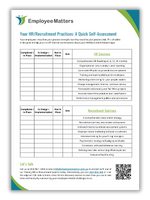
Download Checklist:
HR & Recruitment Self-Assessment
Identify strengths and gaps in your current practices and set the stage for future improvements.