Natasha is a leading HR expert, entrepreneur, author and sought-after media commentator for outlets such as Sunrise (Channel 7), ABC Radio and The Australian Financial Review. Natasha co-founded Employee Matters in 2011 to help Australian businesses achieve success through their people.
Australian SMEs are moving beyond traditional growth models. Growing a company no longer means leasing larger office space and hiring strictly within a tight geographic radius. Today, forward-thinking businesses are adopting a “Blended Workforce” approach - a strategic mix of in-house employees, local outsourced professionals and offshore talent.
Organisations aren’t adopting this model simply to chase a trend; they are doing it for highly practical reasons. A diverse setup helps businesses circumvent local talent shortages, expand operational bandwidth across multiple time zones and secure the operational flexibility required to thrive in a competitive market.
When managed carefully, this model offers Australian businesses valuable flexibility, access to specialised skills, and the ability to structure teams around specific business needs. With the right oversight, a blended approach can actively support engagement, collaboration and productivity. However, without solid HR infrastructure in place, managing multiple talent hubs can easily lead to disjointed communication and operational friction.
To bridge this gap, businesses need the right people, employment processes and structures around their existing workforce.
The Rise of the Blended Workforce in Australia
The traditional office environment is no longer the default. Recent data from Roy Morgan Research in 2025 reveals that “over 6.7 million Australians, representing 46% of employed Australians, work from home at least some of the time, paid or unpaid. The remaining 54% work entirely in-person.” Furthermore, a 2025 report from the Australian HR Institute (AHRI) highlights that over 80% of employers expect hybrid and remote work to either increase or remain steady over the next two years, firmly establishing it as the new operational norm rather than a passing trend.
As local teams embrace flexibility, businesses are also looking across borders. For instance, the Remote Offshore Staffing Statistics Australia Report says that the Philippines remains a resourcing powerhouse for Australian companies, accounting for an estimated 62% of all Australian offshore talent sourcing.
What Can a Blended Workforce Look Like?
In-House Employees: The core team handling high-touch, strategic or location-dependent roles.
Local Outsourced Professionals: Specialists brought in for specific projects, such as IT consultants, graphic designers or local HR experts.
Offshore Employees: Dedicated international team members managing administrative processes, customer support or digital tasks.
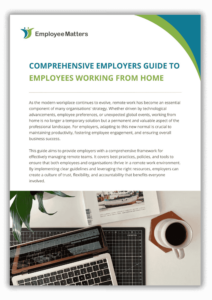
Free Download:
Working From Home Pack
These resources will help your team stay productive, focused, and supported while working remotely
The Challenges of a Poorly Managed Distributed Team
Many Australian businesses are already reaping the benefits of a blended workforce. However, the reality of managing this model can quickly become overwhelming for business owners and management teams if the structure isn’t properly managed.
When operational structures are missing, these major issues may arise:
Cross-border compliance and jurisdictional risks: Different regions can mean different rules - and assumptions can be costly. The Australian HR Institute (AHRI) recently noted that allowing employees to work outside their usual jurisdiction can create severe compliance headaches. For example, a simple interstate move can trigger new payroll tax liabilities under specific “nexus” rules and alter workers' compensation obligations, because employment legislation and State laws follow the work. On an international scale, unmonitored remote work can expose your business to foreign corporate tax liabilities, accidental breaches of Australian sanctions and data privacy vulnerabilities.
Communication silos and proximity bias: In-house employees often have casual catch-ups in the physical workspace, inadvertently leaving remote workers out of crucial decisions. In fact, research by Robert Half Australia revealed that 77% of Australian employers believe proximity to leadership through regular office attendance positively influences career progression, a “proximity bias” that quickly isolates offshore talent.
Administrative and compliance friction: Different regions have entirely different rules regarding work hours, public holidays and standard workplace practices. Juggling cross-border compliance without expert guidance can lead to administrative nightmares and serious compliance risks.
Disjointed onboarding and high turnover: An in-house employee might get a grand office tour and a welcome lunch, while a remote worker simply receives a login credential and a manual. This creates a two-tiered culture that can negatively impact morale. According to the data from Employee Matters, a great onboarding experience improves new-hire retention by over 80%, which means a disjointed experience directly drives expensive turnover.
Practical Steps to Manage a Blended Team
Establish a Strict “Location-First” Approval Framework: As AHRI advises, a change in work location isn’t just an HR decision; it’s a financial and operational one. We strongly advise implementing a policy that requires prior written consent for any location change. Before approving a remote setup, pinpoint the exact location, map the regulatory landscape and loop in payroll and insurance teams early.
Define Clear Roles and Focus on Output: Shift your management style from tracking time at a desk to measuring results. Clarify roles and accountability early so every team member knows their goals and what they are responsible for delivering.
Standardise Onboarding and Expectations: Treat every new hire equally regardless of location. A consistent onboarding process ensures everyone understands the company standards, vision and operational expectations from day one.
Prioritise Inclusive Communication: In a distributed setup, you cannot rely on body language or passing office conversations. Put all processes, updates and feedback in writing and build communication rhythms that actively include remote and offshore employees.
Establish the Right Workplace Setup: Ensure everyone has the appropriate work-from-home arrangements and support. Invest in a unified tech stack (i.e. standard platforms for chatting, video calls and project tracking) to create a shared “digital headquarters.”
Regularly Review the Workforce Structure: Your business needs will evolve. Make it a habit to regularly audit your people strategy to ensure your current mix of local, outsourced and offshore talent stays aligned with your goals.
Partner with Experts: Do not try to build a multinational HR department from scratch or navigate compliance alone. Rely on specialists to lay the groundwork and manage the complex moving parts so you can focus on driving your business forward.
Checklist Download:
Do You Have A Compliant Workplace Health And Safety Approach
Bridging the Gap: How Employee Matters Aligns Blended Teams
For businesses already operating with a complex mix of in-house employees, contractors, local outsourced providers and offshore talent, preventing fragmentation requires more than just good intentions; it requires a robust HR framework. This is where Employee Matters steps in.
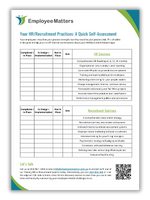
We begin with Employee Metrics, a practical, diagnostic assessment of your current people strategy. This tool helps us clearly identify existing HR gaps and pinpoint where structural or compliance support is needed most. Once the gaps are identified, our HR experts get to work aligning your distributed workforce through:
Structural Review and ER Compliance: Navigating the rules across different talent pools is complicated. We review your current people structure and ensure you remain compliant with ever-changing Employment Relations (ER) legislation. From ensuring the right Awards are in place to implementing the appropriate workplace policies, we remove the guesswork and reduce your compliance risk.
Role Clarity and Accountability: In a blended team, blurred lines can lead to duplicated work or dropped responsibilities. We help clarify roles across your entire workforce, updating job descriptions so that every contractor, outsourced professional and full-time employee knows exactly what is expected of them.
Strengthened Onboarding and Performance Processes: A strong onboarding process isn’t just about making a good first impression; it directly impacts your bottom line. Our Employee Matters onboarding data shows that an effective induction improves new-hire retention by 82% and boosts performance by up to 70%. We help businesses design onboarding and performance management experiences that maximise these results and remain equitable across the board. Whether someone is sitting in a Sydney office or logging in from overseas, they receive the same comprehensive introduction to the company’s goals and values and undergo the same structured performance reviews.
Unified Culture and Communication: Culture does not happen by accident in a blended team; it must be nurtured. Employee Matters’ HR experts help businesses implement communication rhythms and inclusive frameworks such as daily digital huddles, transparent project management tools and inclusive feedback loops that dissolve boundaries. We help design a culture where an outsourced graphic designer from Melbourne and an offshore virtual assistant in another region feel just as valued as the in-house project manager.
Checklist Download:
How Do I Build a Great Culture
Learn how to create and maximise a great culture in your organisation with this quick guide.
Blended workforces aren’t just the future of Australian businesses; they are already here. Today, many Australian SMEs operate with a combination of in-house employees, contractors, outsourced providers, and offshore team members.
The model itself isn’t the challenge. In fact, it can work incredibly well; friction arises only because different working arrangements naturally create different HR considerations. To succeed, businesses need absolute clarity around their people structure, roles, engagement arrangements, onboarding, performance, communication and culture.
You don’t have to navigate these complexities alone. Employee Matters partners with you to assess your current workforce structure, identify critical gaps and put practical HR processes in place so you can support and retain your people as you grow.
Ready to get your team on the same page? Contact us to review your current people strategy and ensure your workforce is fully aligned.
Get in Touch
Tell us a bit about your business and we’ll be in touch to:
Understand the challenges that are holding your team or growth back
Show you how our embedded HR and Recruitment Experts can solve problems faster, without the overheads
Identify high-impact areas where HR and Recruitment support could save you time, stress and money
Map out a tailored approach based on your goals, industry and internal capabilities