

The stakes for getting payroll right have never been higher for Australian employers. As of 1 January 2025, Fair Work rules mean that intentionally underpaying staff is now treated as a serious workplace breach. Additionally, according to updates from the Fair Work Ombudsman (FWO), what was once seen as an accidental administrative error that could be resolved with back pay can now lead to drastic consequences, including huge financial penalties and severe personal repercussions for business leaders.
While headline-grabbing penalties target deliberate wage theft or underpayments, the ripple effects change the risk profile for all employers. Even unintentional administrative oversights in underpayments, overtime calculations, weekend rates or casual allowances can expose business owners and managers to substantial financial liabilities and intense regulatory checks from the Fair Work Ombudsman (FWO).
The New Reality of Payroll Compliance and Leadership Responsibility
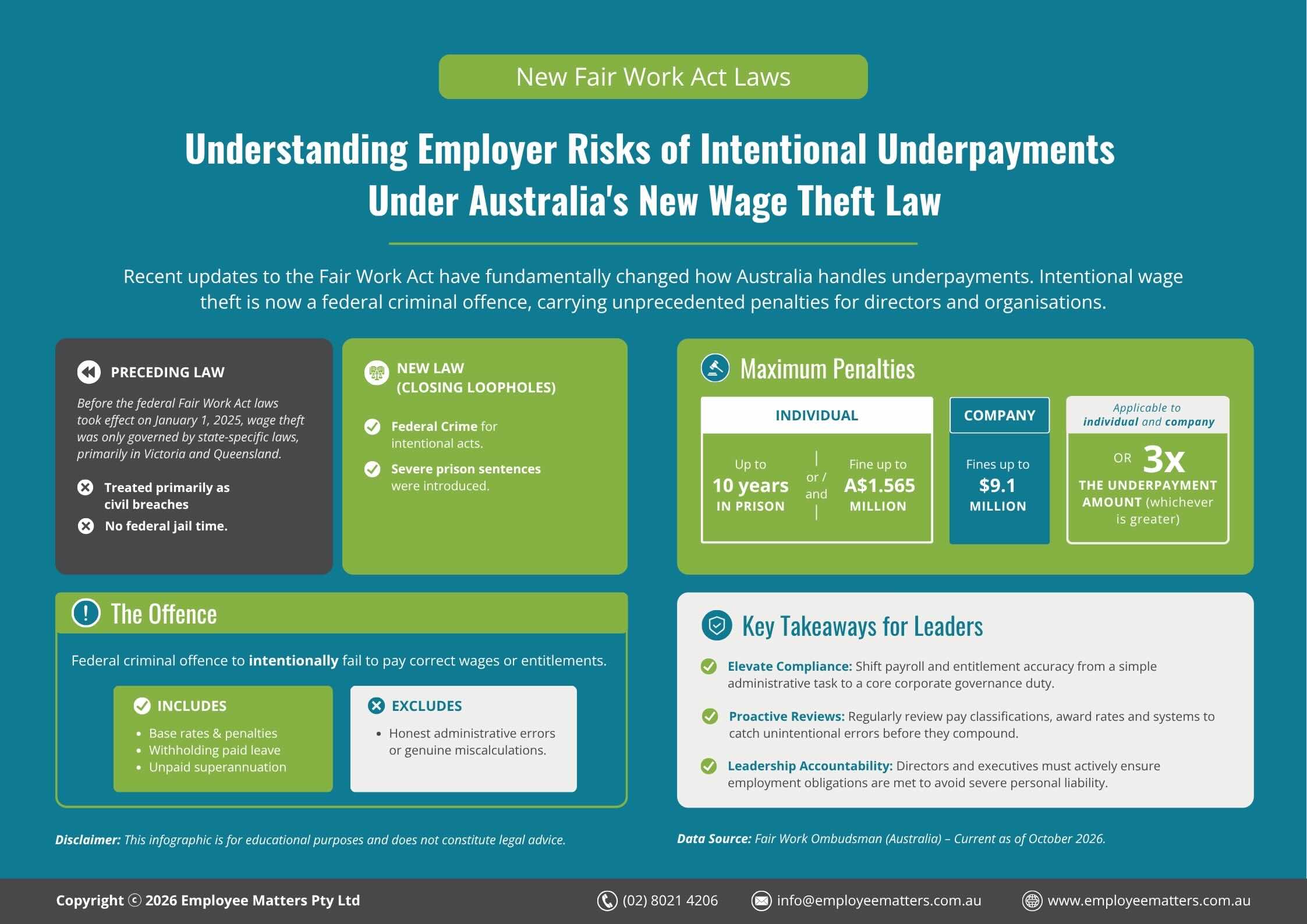
The introduction of a criminal wage theft offence marks a significant escalation in the regulatory framework for wage compliance. Based on the latest guidelines released by the Fair Work Ombudsman, leaders face new realities:
- Repercussions for Individuals: Business owners, senior managers and payroll staff face up to 10 years in prison and financial penalties of over $1million for intentional underpayments. Courts may also impose penalties up to three times the underpayment amount if it exceeds the maximum fine.
- Substantial Penalties for Companies: Under the Fair Work Act amendments, businesses can face penalties of many millions per intentional offence or three times the underpayment amount. Companies can also be held accountable for the actions and oversight of their management boards or senior managers.
- Increased Penalties for Mistakes: For unintentional but reckless or negligent underpayments, civil penalty thresholds have materially increased for companies with 15 or more employees. Ignorance is no excuse for non-compliance and even unintentional breaches can lead to significant financial and reputational consequences.
How Simple Errors Escalate to Systemic Risks
A misinterpretation of a modern award or a glitch in an automated time and attendance system might start as a simple oversight. However, if left unchecked, these errors compound into systemic underpayments over time. The most common category the Fair Work Ombudsman sees is unpaid overtime.
When regulators investigate, they look closely at how the business is run overall. Under recent legislative changes, the FWO now has expanded powers to investigate suspected underpayments and refer serious cases for formal enforcement proceedings. The Fair Work Ombudsman cautions that without a framework to proactively identify and correct underpayments, business leaders risk criminal prosecution rather than benefiting from available compliance protections.
Protecting Leadership Through Independent HR Reviews
To navigate these changes and protect corporate leadership, Australian businesses must understand the distinction between operational payroll execution and strategic HR compliance. While operational payroll teams handle regular pay runs and processing systems using provided data, they rely entirely on the accuracy of underlying inputs like Award coverage, position descriptions and role classifications. When these foundational inputs are incorrect, even flawless payroll execution will lead to non-compliance.
Relying solely on internal payroll teams or outdated software introduces significant risk, making a compliance-first culture essential. Establishing a routine, independent HR review framework bridges this gap by ensuring that job descriptions and Award classifications accurately reflect day-to-day work before any data hits the payroll system.
According to the Fair Work Ombudsman, introducing criminal penalties for wage theft signals a major shift in accountability. Proactively conducting independent HR reviews not only mitigates the risk of substantial financial penalties and reputational damage but also fosters a culture of trust and fairness in your workforce.
For expert guidance on navigating these complex new regulations, reviewing your payroll verification processes or conducting an independent HR review, contact Employee Matters today to protect your leadership team, your reputation and your bottom line.