Natasha is a leading HR expert, entrepreneur, author and sought-after media commentator for outlets such as Sunrise (Channel 7), ABC Radio and The Australian Financial Review. Natasha co-founded Employee Matters in 2011 to help Australian businesses achieve success through their people.
When an employee leaves your business, it’s easy to focus on the logistics such as notice periods, handovers, and recruitment to fill the role. But every resignation is also an opportunity; exit interviews can give you invaluable insights into your culture, leadership, and employee experience, helping you build a better workplace for the rest of your employees, and future hires.
At Employee Matters, we work with businesses across Australia to design effective exit interview processes that turn departing feedback into meaningful action. Here’s how to ask the right questions, interpret the answers, and use what you learn to make lasting improvements.
Why Exit Interviews Matter
An exit interview is a chance to gather honest, candid feedback that current employees might hesitate to share. Departing team members often provide insight into:
Why employees are really leaving
What aspects of your culture are or aren’t working
How management and communication are perceived
What can be done to improve retention and engagement
The goal isn’t to dwell on what went wrong, but to use the feedback to identify trends, address issues and refine your employee experience. When talent shortages and high turnover are constant challenges, understanding why people leave can save you both time and money in the long run.
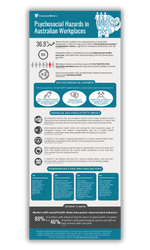
Free Infographic Download:
Psychosocial Hazards in Australian Workplaces
Discover the latest stats on mental health risks, claims, and costs affecting Australian workplaces.
An exit interview should feel like a genuine conversation, not an interrogation. Schedule it toward the end of the notice period., after the employee has completed most of their handover but before their final day.
Hold the meeting in a neutral, private space (or online if they work remotely) and ensure the tone is relaxed and professional. Employees are more likely to be open when they feel psychologically safe.
2. Decide Who Should Conduct It
In smaller businesses, the departing employee’s manager might be too close to the situation to get objective feedback. In these cases, an HR consultant or a neutral third-party facilitator can conduct the interview to ensure honesty and confidentiality.
At Employee Matters, our HR experts often step in to conduct exit interviews for clients, providing an unbiased, external perspective and a safe space for genuine feedback.
The goal isn’t to dwell on what went wrong, but to use the feedback to identify trends, address issues and refine your employee experience. When talent shortages and high turnover are constant challenges, understanding why people leave can save you both time and money in the long run.
3. Use a Structured Exit Interview Template
Having a consistent structure ensures that all exit interviews cover the same essential areas, making it easier to identify patterns across multiple departures.
An effective exit interview template should include:
General reflections on the employee’s experience
Reasons for leaving
Management and leadership feedback
Workplace culture and communication
Development and career progression
Final thoughts and suggestions for improvement
You can include both open-ended (e.g. “How would you describe our company culture?) and scaled questions (e.g. “Rate your overall experience from 1-10”) to capture both qualitative and quantitative insights.
4. Ask the Right Questions
When it comes to exit interview questions Australia-based businesses should focus on, they need to align with Fair Work principles, local workplace culture, and your company’s internal values.
Here are some of the most effective questions to ask:
Understanding Motivation and Experience
What prompted you to start looking for another role?
What attracted you to your new opportunity?
Did your role align with your expectations when you joined?
Evaluating Leadership and Support
How would you describe your relationship with your manager?
Did you feel supported in achieving your goals?
Was feedback provided regularly and constructively?
Exploring Culture and Communication
How would you describe the culture here?
Did you feel included and respected as part of the team?
How effectively did different departments collaborate?
Identifying Process Improvements
Were there any tools, systems, or policies that made your job harder?
What would you change about how we work day-to-day?
What advice would you give to help new employees succeed?
Wrapping Up
What did you enjoy most about working here?
Would you consider returning in the future?
Any final thoughts you’d like to share?
The open-ended questions invite conversation and detailed answers, giving you richer insights, while some prompt an initialyes/no response that you should follow up with questions such as “What are the main reasons for your answering yes/no?”.
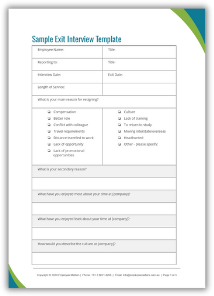
Free Download:
Sample Exit Interview Template
Make your offboarding process smoother and more effective with this ready-to-use Exit Interview Template
One of the most common mistakes businesses make is becoming defensive during an exit interview. Remember: this is your chance to listen and learn. Resist the urge to justify, explain or debate their feedback.
Instead, thank the employee for their honesty, assure them their insights are valued and clarify how the information will be used confidentially and constructively.
6. Look for Patterns, Not One-Offs
An isolated comment might not mean much on its own, but when similar themes appear across several exit interviews, it’s time to take notice.
Perhaps employees consistently mention limited growth opportunities, unclear communication, or pay competitiveness. Identifying these patterns allows you to address root causes rather than symptoms.
An HR consultant can help you create an exit interview template that makes it easy to analyse trends, benchmark against industry norms and translate feedback into practical HR strategies.
7. Take Actionand Communicate It
The biggest mistake a business can make is conducting exit interviews and doing nothing with the results. Show your current employees that you take feedback seriously by:
Sharing general themes (without naming individuals)
Outlining planned improvements
Following through on commitments
This builds trust and signals that your organisation values transparency and continuous improvement.
Checklist Download:
What Do I Do If Someone Resigns?
A simple guide to the key steps you should follow when an employee hands in their resignation.
At Employee Matters, we support Australian businesses with HR advisory and people-strategy services, including designing exit interview questions that deliver real insights.
We can help you:
Develop a tailored exit interview template that aligns with your culture and compliance needs
Conduct confidential exit interviews to ensure honest feedback
Analyse data and identify actionable trends
Train your leaders to handle feedback constructively
With expert guidance, your exit interviews stop being an administrative task and become a strategic tool for improving retention, engagement, and culture.
With a structured exit interview template, a skilled facilitator, and a genuine commitment to act on feedback, your business can build a stronger, more people-focused organisation for the future.
Ready to make your exit interviews count?
Get in touch with Employee Matters today to create a process that delivers real insights and better outcomes for your business:
Streamlined Recruitment & HR Strategy Drives Success for Global IT Leader
Tambla was struggling with traditional recruitment methods and finding it difficult to attract the right talent. They needed a more effective approach that aligned with business objectives and strengthened both their HR culture and employer brand.