Subscribe Now

Simply Enter Your Details To Find Out How
We Can Help Your Business


Ready to go on a Discovery?


To Book your Employee Metrics Lite session, please fill in the details below and we will be in contact.

Apply Now

Please fill up the fields below
Employee Matters Logo
Get in Touch Get in Touch (02) 8021 4206
  • HR Services
        • Outsourced HR
        • How We Work - HR
        • Employee Metrics - Data Diagnostics
        • Featured Industries:

        • Australian Startups
        • Finance, Insurance and FinTech
        • Featured Solutions:

        • HR Consulting
        • Workplace Training
        • HR Policies & Procedures
        • Employee Assistance Program (EAP)
        • Products and Packages

        • We deliver measurable results through great HR:

        • Hear What Our Clients Say
  • HRIS
    • EmployeeHub – Managed HRIS (HR Information System)
  • Recruitment Services
        • Outsourced Recruitment
        • Featured Solutions:

        • Tiered Recruitment Packages
        • Recruitment Partner Service (RPS)
        • Learn More:

        • Hiring Manager Training
        • Why Choose Us for Recruitment?
        • How We Work (RPS)

        • We’re not an agency, and our clients love that:

        • Hear What Our Clients Say
  • About Us
    • About Employee Matters
    • Meet the Team
    • What Our Clients Say
    • Referrals and Partnerships
    • Core Values and Vision
  • Resources
        • The Latest:

        • News and Media
        • Blog Articles
        • Videos and Webinars
        • Featured Content:

        • ER Legislation Resource Hub
        • e-Book: 7 ER Risks for Employers
        • Downloads and Knowledge Hub:

        • HR Forms & Checklists
        • 'Working From Home' Pack
        • HR & Recruitment FAQ’s
        • Book: "From Hire to Fire"
        • From the Archives:

        • 'Employees Matter' Podcast
  • Jobs
  • Contact Us

5 Key Components of Successful Workplace Disciplinary Action Policies & Procedures

Home » 5 Key Components of Successful Workplace Disciplinary Action Policies & Procedures

December 12, 2023
  • Natasha Hawker HR recruitment expert
    Written by Natasha Hawker
    Founder and Managing Director

    Natasha is a leading HR expert, entrepreneur, author and sought-after media commentator for outlets such as Sunrise (Channel 7), ABC Radio and The Australian Financial Review. Natasha co-founded Employee Matters in 2011 to help Australian businesses achieve success through their people.

In any thriving organisation, maintaining high standards of conduct and behaviour is crucial for maintaining order, fostering employee growth, and safeguarding the interests of the organisation. A well-crafted Code of Conduct and a clear Misconduct and Disciplinary Action policy not only sets clear expectations but also ensures fairness and consistency in addressing issues related to misconduct and breaches of the law or company policies.

Free Download:

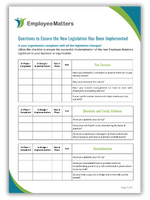
Your Employee Relations Legislation Implementation Checklist

Quickly assess if your business is meeting the latest Fair Work requirements with our ready-to-use checklist

In this blog article, we cover 5 key components for creating successful workplace disciplinary action policies & procedures:

  1. Establishing Clear Objectives

Through a robust disciplinary policy, Employees are guaranteed fair treatment during disciplinary proceedings which follow legal requirements and principles of Natural Justice. The disciplinary policy outlines counselling and disciplinary methods for addressing unsatisfactory behaviour. It helps managers clearly communicate concerns and encourages improvement. The process ensures fairness, confidentiality, and support for employees to improve, except in cases of serious misconduct where appropriate actions are taken immediately.

  1. Responsibilities

While senior leaders hold overall responsibility for staff direction, the day-to-day performance and behaviour of employees within a department or team are usually the responsibility of the direct manager. If informal measures prove ineffective, a formal process may be initiated, possibly involving higher management. The senior leader may delegate the disciplinary process to other managers as appropriate.

  1. Investigation Process

When misconduct is alleged, the disciplinary policy will allow for investigations to take place as the facts will need to be established. Often the facts are clear but if there is any uncertainty then an investigation will be needed.

If an investigation is required, the senior leader can ask the workplace manager for written details and evidence of the allegations and appoint someone to investigate. This could be a manager, a representative from Human Resources or an external investigator if the matter is particularly sensitive or serious.

The investigator will interview relevant people and seek written statements. This will involve ensuring that the employee concerned has the opportunity to understand and respond to the allegations of misconduct made against them. The investigator will then report on the findings and whether on the balance of probabilities, the allegations of misconduct are substantiated i.e. if they occurred.

  1. Formal Disciplinary Hearing

Where misconduct has taken place and formal disciplinary action may be taken, a formal hearing must be held.

It is important that the process for this is fair and reasonable, which means:

    • Giving the employee reasonable notice of the hearing (24 hours is the absolute minimum).
    • Giving the employee the opportunity if they wish to have a support person present in the hearing.
    • Ensuring the employee is clearly told the nature of the misconduct allegation.
    • Ensuring the employee has the opportunity to respond to the allegations and to set out reasons or mitigating circumstances for their actions.
    • Ensuring the employee’s response is considered and taken into account before a final decision is made.
    • Ensuring any disciplinary action taken is within the policy, is reasonable, and is lawful, especially if the action involves terminating the employee’s employment.
  1. Documentation

Thorough documentation is pivotal throughout the disciplinary process. Managers must maintain file notes for all discussions with the employee, the investigator must have notes and statements from everyone who takes part, and formal disciplinary action must be confirmed in writing.

From Gap to Gold Standard: Barrelhouse’s Success in Creating a Safer Workplace

As part of an audit of compliance with the latest Respect@Work legislation, Safe Work NSW conducted an audit across the hospitality industry in the Sydney CBD. A Barrelhouse Group venue was audited and gaps were identified in compliance with the latest Respect@Work legislation. The audit of hospitality businesses in Sydney’s CBD was prompted when allegations of sexual harassment with a competitor group surfaced. Barrelhouse Group wanted to address the issue head on and worked with Employee Matters as experts in this area.

Read Case Study

Creating clear Workplace Misconduct and Disciplinary Action policies & procedures, which everyone understands and follows when dealing with conduct issues, together with your written Code of Conduct, will give you the basis for dealing with any alleged misconduct in a way that is fair, reasonable and lawful.

If you need help with a misconduct/disciplinary issue, and would like to speak with an experienced member of our team to learn how we can support you with the matter, please use the button below to book a free call. We also assist organisations with creating and updating their Misconduct and Disciplinary Action policies & procedures — if you don’t have one or yours is not up-to-date, enquire below to ensure you’re not caught out should employee misconduct occur.

Get in Touch

Tell us a bit about your business and we’ll be in touch to:

  • Understand the challenges that are holding your team or growth back
  • Show you how our embedded HR and Recruitment Experts can solve problems faster, without the overheads
  • Identify high-impact areas where HR and Recruitment support could save you time, stress and money
  • Map out a tailored approach based on your goals, industry and internal capabilities

Alternatively, you can call us on (02) 8021 4206.

Tags: Policies, Employee management, Employee misconduct

Latest News and Media

Work From Home in Victoria: What Could the Proposed Changes Mean for Employers?

  • 10 September 2026
Work from home in Victoria is once again in the spotlight, with proposed changes prompting discussion about workplace flexibility, employee expectations and what the future of work could look like....
Read More

Ageism in the Workplace: What Australian Businesses Can Learn From easyJet’s Recruitment Drive

  • 1 September 2026
Could Australian businesses be overlooking an experienced and highly capable pool of talent? UK airline easyJet has recently launched another recruitment campaign targeting people aged 50 and over, following an...
Read More

Australia’s Job Mobility Falls to a Record Low: What Does It Mean?

  • 10 August 2026
Australia’s job mobility rate has fallen to its lowest level on record, with fewer Australians choosing to change jobs amid ongoing economic uncertainty. In a shift from the job-hopping trend...
Read More
Should Parents of School-Aged Kids Get Extra Paid Annual Leave

Should Parents of School-Aged Kids Get Extra Paid Annual Leave? – SA Afternoons with Jason Chong | 891 ABC Radio Adelaide

  • 11 July 2026
Have you ever looked at the school calendar and realised the maths just doesn't add up? Working parents face a massive gap between their standard four weeks of annual leave...
Read More

Revealed: The Data Behind Australia’s ‘Great Socceroos Sickie’

  • 1 July 2026
When Australia's World Cup campaign captured the nation's attention, many workplaces experienced something unexpected: a noticeable increase in employee absences. Employee Matters Managing Director Natasha Hawker recently shared her workplace...
Read More

Career Questions People Are Asking AI

  • 29 June 2026
Artificial intelligence is rapidly changing how we work, learn and make decisions but can it really give reliable career advice? Employee Matters Founder and Managing Director, Natasha Hawker, recently joined...
Read More

Sickies, Long Lunches, Green-And-Gold Fever: Australia Set for a Midday Socceroos Party

  • 26 June 2026
Australia’s highly anticipated FIFA World Cup clash against Paraguay lands squarely in the middle of the workday at 12pm Friday AEST. With employers nationwide bracing for a wave of work-from-home...
Read More

When “Office Etiquette” Emails Go Wrong: A Lesson in Workplace Communication

  • 23 June 2026
Navigating sensitive workplace issues is a core part of any manager's job, but a recent incident at a regional organisation serves as a textbook example of poor communication. Following a...
Read More

Latest Blog Articles

How Do Businesses Successfully Manage a Blended Team of In-House, Local Outsourced, and Offshore Workers in Australia?

  • 14 September 2026
Australian SMEs are moving beyond traditional growth models. Growing a company no longer means leasing larger office space and hiring strictly within a tight geographic radius. Today, forward-thinking businesses are...
Read More

The Hidden Mental Health Crisis in Australia: Supporting the ‘Sandwich Generation’

  • 24 August 2026
Employee Matters Managing Director, Natasha Hawker recently shared a powerful LinkedIn post in a moment of vulnerability - it wasn't about a week from hell, it was a snapshot of...
Read More

Why Are Australian Businesses Choosing Embedded Fractional Recruitment Over Traditional Agencies in FY 26-27

  • 20 August 2026
The way Australian businesses are approaching their hiring is changing. For some organisations, paying a recruitment agency a percentage of a candidate’s salary for every hire no longer makes sense,...
Read More

Hidden Risks of Employee Monitoring | What Employers Need to Know

  • 7 August 2026
Employee monitoring has become standard practice for many Australian businesses, particularly since remote and hybrid work arrangements became part of everyday business. Employers may use monitoring tools to protect company data, improve...
Read More

The Power of Purpose: Why an Engaged Workforce is Australia’s Ultimate Competitive Advantage

  • 4 August 2026
There was a time when employee engagement was viewed as a soft HR concept - a warm and fuzzy metric relegated to annual surveys and workplace pizza parties. However, in...
Read More

Strategic Workforce Planning: The Essential Blueprint for Future-Proofing Your Business

  • 27 July 2026
In a rapidly changing business environment, having the right talent in place at the right time is a critical requirement for survival and growth. Many organisations make the mistake of...
Read More

Purpose Over Paychecks: Why a Strong EVP is Your Best Recruitment Tool

  • 22 July 2026
In the current job market, we’re seeing a fascinating shift. It’s no longer just about the digits on a paycheck; it’s about the soul of the company. Recently, our team...
Read More

Accessorial Liability: Why You (Personally) Can’t Afford to “Just Follow Orders”

  • 22 April 2026
In Australian employment law, the "corporate veil" provides little protection for professionals. Under Section 550 of the Fair Work Act 2009, individuals can be held personally liable for company breaches....
Read More

(02) 8021 4206
  • About Us
    • About Employee Matters
    • Book a Free Call
    • What Our Clients Say
  • Services
    • Outsourced HR Services
    • Outsourced Recruitment
    • Recruitment Partner Service (RPS)
  • Resources
    • News and Media
    • Forms & Checklists
    • Blog
  • News and Media
  • Blog
  • Contact Us

Employee Matters helps businesses in Sydney, Melbourne, Perth, Brisbane, and across all major Australian towns and cities with their HR and Recruitment needs.


Home » 5 Key Components of Successful Workplace Disciplinary Action Policies & Procedures
Copyright | Employee Matters
Terms + Conditions | Privacy Policy
Design by Five by Five