
Why Workforce Planning Is Crucial for Modern Organisations
Failing to plan your workforce proactively can result in significant operational bottlenecks, overworked existing staff and missed key market opportunities. Here is why taking a strategic approach is essential:
- Anticipating Skill Shortages: Technology and industry demands evolve rapidly. Workforce planning allows you to identify which skills will become redundant and which new capabilities your business will need over the next 3 to 5 years, giving you time to upskill existing team members or recruit strategically.
- Mitigating Psychosocial Risk and Burnout: Unplanned expansion or sudden talent gaps often force remaining staff to absorb unsustainable workloads. High workloads and poor job design are major psychosocial hazards that can lead to stress, reduced productivity and costly workers' compensation claims.
- Reducing Recruitment and Turnover Costs: Rushed, reactive hiring frequently leads to poor cultural fits or bad skill matches. By mapping out your hiring needs in advance, you can move away from transactional recruitment and lower your overall expenses. At Employee Matters for instance, our outsourced recruitment offerings seamlessly integrate a modern HR tech stack directly into a hiring strategy reducing overall costs and time to fill.
- Supporting Organisational Restructures: If your business needs to scale down, re-evaluate roles, or restructure, clear workforce planning ensures changes are made methodically. This helps avoid messy redundancy processes and minimises the risk of legal or regulatory intervention.
4 Steps to Build an Effective Workforce Plan
Creating an actionable workforce plan doesn't have to be overly complex. Following a clear, structured methodology ensures you cover all key bases:
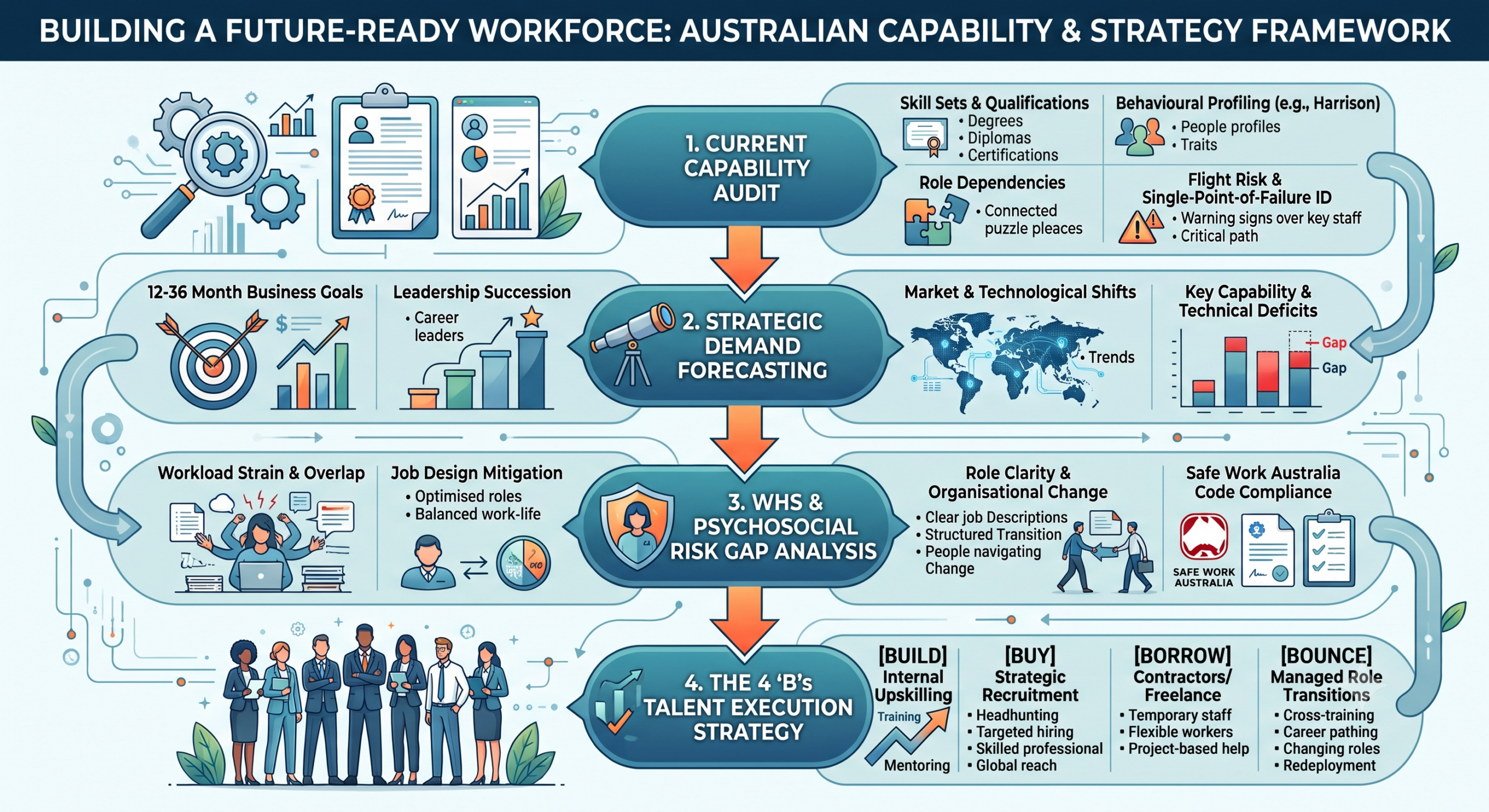
1. Analyse Your Current Capability
Start by taking a snapshot of your existing talent pool. Evaluate your team's current skill sets, experience levels, performance metrics and demographics. Tools like behavioural profiling can help identify inherent soft skills, leadership capability and behavioral traits that might otherwise go unnoticed. At Employee Matters we partner with Harrison Assessments to offer these insightful behavioural profiles to our clients.
2. Forecast Future Business Requirements
Look at your company's strategic goals over the next 12 to 36 months. Are you launching a new product, expanding into new geographical markets, or adopting new technology? Map out what human resources, technical proficiencies and leadership structures will be necessary to achieve those milestones.
3. Perform a Gap Analysis
Compare your current reality with your future demands to identify critical gaps. Ask yourself:
- Which roles will become obsolete or require significant upskilling?
- Where are the single points of failure (e.g., key personnel nearing retirement or holding unique technical knowledge)?
- What new roles need to be created entirely?
4. Develop and Implement Talent Strategies
Once the gaps are clear, establish your action plans. These strategies generally fall into four buckets:
- Build: Upskill or cross-train your current workforce to fill future gaps.
- Buy: Recruit new talent with the specific skills required.
- Borrow: Utilise contractors, freelancers or temporary staff for specialised, short-term needs.
- Bounce: Thoughtfully transition out roles or skill sets that no longer align with the business direction.